Introduction
There is something genuinely comforting about walking through the front door after a long day and being greeted by the smell of a meal that has been quietly cooking all afternoon. No frantic stovetop juggling, no last-minute scramble to get dinner on the table — just food that has been steadily doing its thing for hours, ready and waiting when you are. That experience is precisely what a good slow cooker is designed to deliver, and it is one of the reasons this style of cooking has remained popular across generations of home cooks.
The Crock-Pot brand is, in many ways, synonymous with slow cooking itself. The original Crock-Pot was introduced decades ago and essentially created the category of countertop slow cookers as most people know it today. The 7-quart manual model represents the brand’s straightforward, no-frills approach to that same concept — a large-capacity cooker built for families, designed around simplicity, and intended to handle the kinds of hearty, crowd-feeding meals that make slow cooking so appealing in the first place.
This article takes a detailed look at the Crock-Pot 7-Quart Manual Slow Cooker — what it offers, how it works across different meal types, who tends to benefit from it most, and what to consider before deciding whether it belongs in your kitchen.
What Is the Crock-Pot 7-Quart Manual Slow Cooker?
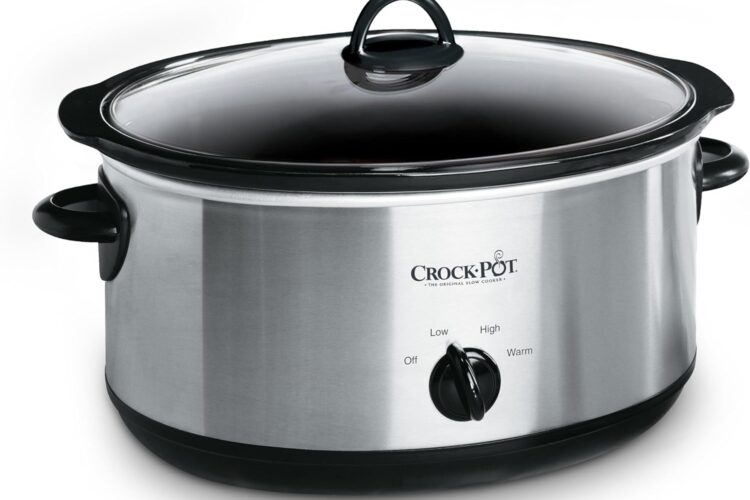
At its core, this is a large-format, manually operated slow cooker. It does not have digital controls, programmable timers, or Wi-Fi connectivity. What it has is a removable stoneware insert, a tempered glass lid, a heating base with three settings — low, high, and warm — and a 7-quart capacity large enough to serve eight or more people and accommodate a roast of up to six pounds.
The manual nature of this cooker is part of its identity. There are no complex menus to navigate and no settings that require a tutorial. You choose your heat level, set a kitchen timer if you need a reminder, and let the cooker do the rest. For cooks who want reliability and simplicity over programmable features, this model sits comfortably in that space.
The stoneware insert is dishwasher-safe, which makes cleanup after a long cook significantly more manageable — particularly important when the insert has been holding a rich braise or a thick stew for eight hours.
Key Features of the Crock-Pot 7-Quart Manual Slow Cooker
7-Quart Capacity
This is the defining characteristic of the appliance and the first thing worth understanding before purchasing. Seven quarts is a substantial volume — large enough to hold a six-pound bone-in roast with room for vegetables and braising liquid around it, or enough chili to feed a large group with leftovers to spare.
To put it in practical terms, a 7-quart slow cooker is generally recommended for households of six or more people, or for anyone who regularly cooks for gatherings, potlucks, or meal prep sessions where volume matters. It’s notably larger than the more common 4-quart and 6-quart sizes, which means it can handle recipes that smaller cookers simply don’t have the room for.
For smaller households of two to three people, the 7-quart size can still be useful — it just means more intentional planning around leftovers, which many people consider an advantage rather than an inconvenience.
Three Manual Settings: Low, High, and Warm
The control interface on this model is as uncomplicated as it gets. A single dial or switch moves between low, high, and warm. That’s the entire control set.
Low is the standard slow cooking setting, typically used for longer cook times ranging from six to ten hours. It produces the most tender results in tough cuts of meat and is the setting most people picture when they think of leaving dinner going all day while at work.
High is a faster setting, generally appropriate for cook times of three to five hours. It reaches a higher internal temperature than low and works well when you have less time but still want the benefits of slow, moist-heat cooking.
Warm is not a cooking setting — it’s a holding setting. Once your food is done cooking, switching to warm keeps it at a safe serving temperature without continuing to cook it further. This is particularly useful when meals are served over an extended window of time, such as at a buffet, a family gathering, or any situation where people eat at different times.
Removable Stoneware Insert
The cooking vessel inside the Crock-Pot is made from stoneware — a dense, heavy ceramic material that retains and distributes heat evenly. This is meaningful for slow cooking because consistent, gentle heat throughout the pot produces more uniform results than cooking environments with hot spots or uneven temperature distribution.
The stoneware insert is removable, which serves two practical purposes. First, it can be lifted out and brought directly to the table for serving, which reduces the number of dishes involved in getting food from cooker to plate. Second, it can be placed in the dishwasher for cleaning, which is a significant convenience after cooking something rich and saucy for hours.
It’s worth noting that stoneware is heavy — a 7-quart insert full of food is a substantial lift — and it should not be used on a stovetop or subjected to sudden temperature changes, such as placing a cold insert directly into a very hot environment.
Tempered Glass Lid
The lid that comes with this slow cooker is made from tempered glass, which allows you to check on the contents without lifting the lid. This matters more than it might seem. Every time the lid is lifted during a slow cook, heat and steam escape from the pot, which can add 15 to 30 minutes to the effective cooking time. Being able to see what’s happening inside without disturbing the cooking environment is a practical feature that many slow cooker users come to appreciate.
Serves 8+ People and Fits a 6-lb Roast
The product is specifically designed and sized with larger servings in mind. Fitting a six-pound roast — whether beef, pork, or lamb — is not something every slow cooker can do comfortably, and the 7-quart volume ensures there is enough room for liquid and accompanying vegetables alongside the main protein. This makes the cooker particularly well-suited for Sunday dinners, holiday meals, or any occasion where a substantial centerpiece dish needs to be prepared for a group.
Dishwasher-Safe Components
The stoneware insert and glass lid are both dishwasher-safe, which is one of the more underrated practical features of this model. Slow cooker recipes often involve sticky sauces, rendered fat, and long-cooked starches that can cling to cooking surfaces. Being able to put the insert straight into the dishwasher rather than hand-scrubbing it is a genuine quality-of-life improvement for regular users.
How the Crock-Pot 7-Quart Can Be Used
Pot Roast and Braised Meats
This is the slow cooker’s most iconic use, and the 7-quart model handles it with ease. A chuck roast, a pork shoulder, a lamb leg, or a whole chicken placed on a bed of aromatics and root vegetables with enough braising liquid to partially submerge the meat will emerge after six to eight hours on low as one of the most satisfying, deeply flavored meals a home cook can produce. The connective tissue in tough cuts breaks down gradually under slow, moist heat in a way that no other cooking method replicates quite as effortlessly.
The six-pound roast capacity means you don’t need to trim down the cut or compromise on size — the cooker accommodates a proper roast the way a roast is meant to be prepared.
Soups and Stews
Thick beef stew, chicken noodle soup, minestrone, lentil soup, white bean and kale — virtually any soup or stew translates naturally to a slow cooker. The long cooking time allows flavors to develop and meld in a way that a 30-minute stovetop version simply cannot achieve. The 7-quart size means you can make a large enough batch to serve the whole family and still have plenty left over for lunches later in the week.
One practical tip worth mentioning: pasta, rice, and delicate greens like spinach are best added in the final 20 to 30 minutes of cooking to prevent them from becoming overcooked and mushy during a long slow cook.
Pulled Pork and Shredded Chicken
Few things emerge from a slow cooker more reliably impressive than pulled pork or shredded chicken. A pork shoulder cooked on low for eight to ten hours becomes so tender that it falls apart with minimal effort, ready to be piled onto buns, wrapped in tortillas, or served over rice. Chicken thighs cooked in broth or salsa for six hours produce similarly effortless results — lean, tender, and full of flavor from the cooking liquid.
For meal preppers and large families, the 7-quart capacity means a single cook session produces a quantity of protein that can anchor several different meals across the week.
Chili
Slow cooker chili is a classic for good reason. The extended cooking time allows the spices to bloom and the flavors to integrate far more completely than a quick stovetop version achieves. A 7-quart cooker holds enough chili for eight to ten servings, making it a natural choice for Super Bowl gatherings, fall and winter dinners, or a freezer-stocking batch cooking session.
Ground beef or turkey can be browned beforehand and added along with beans, tomatoes, peppers, onions, and spices to cook low and slow all day. The result is a deeply flavored, hearty chili that improves with time.
Casseroles and One-Dish Meals
The slow cooker lends itself naturally to casserole-style dishes — chicken and rice, pasta bakes, bean and vegetable casseroles — where multiple components cook together in one vessel over an extended period. These dishes are particularly appealing for busy households because they require minimal preparation, produce a complete meal in a single dish, and leave very little cleanup behind.
Holiday and Entertaining Dishes
The 7-quart size really shows its value during the holidays or when cooking for guests. A large ham, a turkey breast, a pot of holiday chili, or a slow-cooked mulled cider or wassail can all be prepared in this cooker while the oven is reserved for other dishes. For hosts who are managing multiple courses simultaneously, having a reliable large-format slow cooker handling one component of the meal independently is enormously helpful.
Dips and Party Foods
Beyond main courses, the warm setting makes this slow cooker useful for keeping party dips, queso, or cocktail sauces at serving temperature throughout an event. Spinach artichoke dip, buffalo chicken dip, or a large batch of meatballs in sauce — all of these work well prepared and held in the cooker over the course of a party, keeping food warm and accessible without requiring a host to reheat dishes repeatedly.
Overnight Oatmeal
Steel-cut oats cooked on low overnight is a lesser-known but genuinely useful application of a slow cooker. Oats, water or milk, and any desired mix-ins go in before bed, and a warm, ready breakfast is waiting in the morning. For families with hectic mornings, this approach to breakfast preparation deserves more attention than it typically receives.
Who the Crock-Pot 7-Quart May Be Suitable For
Large Families
The most obvious fit for a 7-quart cooker is a household with five or more people. Being able to prepare a single pot of food large enough to serve everyone in one go — without halving a recipe or making two separate batches — is a practical advantage that smaller cookers can’t offer.
Home Cooks Who Value Simplicity
Not everyone wants a kitchen appliance with a digital display, a programmable timer, and a Bluetooth connection. For cooks who prefer a straightforward, reliable tool that does what it’s supposed to without requiring a manual to operate, the manual three-setting design of this Crock-Pot is genuinely appealing. There’s very little that can go wrong with a dial that has three positions.
People Who Cook Ahead or Meal Prep
The capacity and low-maintenance nature of slow cooking make this appliance a natural partner for weekend meal prep. A large batch of shredded meat, a pot of beans, or a substantial soup cooked on Saturday can provide the foundation of multiple weekday meals. The cooker does its work without requiring supervision, which means the time investment is largely limited to ingredient prep and cleanup.
Working Adults and Busy Parents
The ability to load a slow cooker in the morning before leaving the house and return in the evening to a fully cooked meal is the appliance’s most enduring appeal. For households where both adults work full-time or where evenings are filled with children’s activities and other obligations, that kind of hands-off convenience has real value.
Hosts and Entertainers
Whether for holiday meals, game day gatherings, or casual dinner parties, the 7-quart size makes this cooker a useful tool for anyone who frequently cooks for a crowd. The warm setting is particularly valuable in entertaining contexts, allowing food to be prepared ahead and held at serving temperature throughout the event.
Budget-Conscious Home Cooks
Slow cooking has a well-established reputation for making affordable cuts of meat taste significantly better than their price suggests. Chuck roast, pork shoulder, chicken thighs, and lamb neck — all less expensive cuts that toughen under high heat — become tender and flavorful after a long slow cook. Combined with bulk dried beans and inexpensive root vegetables, the slow cooker is one of the more cost-effective cooking tools available for producing satisfying, nourishing meals.
Important Things to Consider
No Programmable Timer
The manual nature of this cooker means there is no built-in timer that automatically switches from cooking to warm after a set number of hours. If your schedule means food might cook longer than intended — for example, if you’re out of the house for ten hours but the recipe only calls for eight — the food may overcook. Many users address this by using a separate outlet timer or a smart plug to cut power to the cooker after a certain number of hours, but it’s an important limitation to understand before purchasing.
For households where someone is home during the day, this is rarely an issue. For those who need a fully automated cook cycle with a guaranteed transition to warm, a programmable model may be a better fit.
Size and Weight
A 7-quart slow cooker is a large appliance. Full of food, the stoneware insert alone is heavy — and the entire unit requires meaningful counter or storage space. Before purchasing, it’s worth considering where the cooker will live in your kitchen and whether the storage situation accommodates its footprint.
Stoneware Care
While the stoneware insert is durable and dishwasher-safe, it does require some care. It should not be preheated empty, placed on a stovetop burner, or subjected to sudden and extreme temperature changes — for example, adding cold liquid to a very hot empty insert. These situations can cause cracking. Additionally, if the stoneware does crack, the insert needs to be replaced before further use, as cracked stoneware can be a safety concern.
Condensation Under the Lid
During slow cooking, moisture accumulates under the glass lid and drips back into the pot. This self-basting effect is generally beneficial for keeping food moist, but it also means that recipes cannot reduce or thicken in the same way they would in an open pot on a stove. Dishes that you want to be thicker or more concentrated in flavor often benefit from a final reduction on the stovetop after the slow cook is complete, or from the addition of a thickening agent like cornstarch toward the end of cooking.
Not Suitable for All Recipes
Slow cooking works beautifully for certain types of dishes and less well for others. Recipes requiring browning, caramelization, or a crispy exterior are not suited to this cooking method, as slow cookers work entirely with moist heat. Fish and seafood are generally too delicate for long slow cooking and tend to overcook quickly. Dairy-based sauces and cream are usually best added toward the end of a recipe to prevent curdling. Understanding which categories of food suit the slow cooker and which don’t is part of using it effectively.
How the Crock-Pot 7-Quart Compares to Other Cooking Approaches
Manual vs. Programmable Slow Cookers
Programmable slow cookers add a digital timer that automatically transitions the appliance from cooking to warm after a set duration. This is a meaningful feature for households where no one will be home to monitor the cooker and recipe timing is important. The manual Crock-Pot sacrifices that automation in exchange for simplicity and a lower profile design. Neither approach is objectively superior — it depends on how the cooker will be used in your household.
Slow Cooker vs. Dutch Oven
A Dutch oven is the stovetop and oven equivalent of a slow cooker in many ways — it’s designed for long, braised cooking and produces deeply flavored results. The key differences are that a Dutch oven requires oven or stovetop space and more active monitoring, while a slow cooker operates independently and frees up both those resources. For people who already own and love a Dutch oven, a slow cooker is a complementary tool rather than a replacement, particularly when oven space is at a premium during large meals.
Slow Cooker vs. Instant Pot
The Instant Pot’s slow cooker function covers similar ground to a dedicated slow cooker, and many households that own both eventually find they default to the Instant Pot for pressure cooking and the slow cooker for long, hands-off braises. The Instant Pot is faster for most dishes due to its pressure capability, but the slow cooker produces a different texture and depth of flavor in dishes that genuinely benefit from extended low-heat cooking. They’re complementary tools, not direct competitors.
Slow Cooker vs. Oven Braising
Many slow cooker recipes are adapted from classic oven braise techniques — pot roast, short ribs, lamb shanks. The oven version typically produces more caramelization and a richer fond from the browning that occurs, while the slow cooker version is more hands-off and frees the oven for other purposes. Neither is categorically better; the choice often comes down to schedule, oven availability, and personal preference for the finished texture.
Frequently Asked Questions
Is it safe to leave a slow cooker on all day while I’m at work?
Slow cookers are specifically designed for unattended, all-day cooking. They operate at low temperatures and are built with safety in mind for this use case. That said, standard appliance safety practices apply — ensure the cooker is on a stable, heat-resistant surface, away from flammable materials, and not covered or enclosed. Many households use slow cookers unattended daily without issue.
How full should the slow cooker be for best results?
Most slow cooker manufacturers recommend filling the insert between half and two-thirds full for optimal results. Too little food can cook too quickly; too much can prevent the lid from sealing properly or result in uneven cooking. For the 7-quart model, that translates to roughly 3.5 to 5 quarts of food and liquid.
Can I put frozen meat directly into the slow cooker?
This is a common question, and the general guidance from food safety authorities is to avoid placing frozen meat directly into a slow cooker. The concern is that frozen meat takes too long to reach a safe internal temperature when starting from frozen, which increases the risk of bacterial growth during the early stages of cooking. Thawing meat in the refrigerator overnight before slow cooking is the recommended approach.
Why is my slow cooker food watery or lacking flavor?
Slow cookers trap moisture inside the pot, which means liquid doesn’t evaporate the way it does during stovetop or oven cooking. If a dish turns out more watery than expected, reducing the amount of added liquid in the recipe or finishing the dish on the stovetop briefly after cooking can help concentrate the flavors. It’s also worth noting that slow cooker recipes are typically developed with less liquid than their stovetop equivalents for precisely this reason.
Can I use the stoneware insert in the oven?
Many Crock-Pot stoneware inserts are oven-safe up to a certain temperature — typically around 400°F — without the lid. However, this varies by model, and it’s important to check the specific product documentation before placing the stoneware in the oven. The glass lid is generally not oven-safe.
How do I prevent food from sticking to the stoneware?
For dishes prone to sticking — particularly those without much liquid — a light coating of cooking spray or a slow cooker liner can help. Slow cooker liners are disposable bags that fit inside the stoneware and make cleanup virtually effortless, which is particularly convenient when cooking something sticky or saucy.
What’s the difference between the low and high settings in terms of final results?
Both settings ultimately reach a similar final temperature inside the pot — the difference is in how quickly they get there. Low takes longer and is generally preferred for tougher cuts of meat and dishes that benefit from truly extended cooking. High produces similar results in less time but can sometimes lead to slightly tougher textures in certain proteins. For most recipes, low is the preferred setting when time permits.
Can I cook desserts in a slow cooker?
Yes. Slow cooker desserts are a genuinely popular category of recipes. Chocolate lava cake, bread pudding, rice pudding, poached pears, and various fruit cobblers all work well in a slow cooker. The moist, gentle heat produces particularly good results in custard-style and pudding-style desserts. The 7-quart size is particularly useful here for feeding a crowd.
Conclusion
The Crock-Pot 7-Quart Manual Slow Cooker occupies a specific and well-defined place in the kitchen appliance landscape. It’s not trying to be a multicooker or a digital device with programmable schedules. It’s a large, reliable, straightforward slow cooker built for the kind of low-maintenance, high-reward cooking that the category has always been known for — hearty meals that develop deep flavor over time without demanding much from the person who made them.
Its 7-quart capacity makes it particularly suitable for large families, frequent hosts, and batch cookers who want to prepare food in meaningful quantities. The stoneware insert distributes heat evenly and goes straight into the dishwasher when dinner is done. The three-setting manual control is simple enough that anyone can use it on the first attempt without reading an instruction manual.
Where it has limitations — no programmable timer, no pressure cooking, no browning capability — those are limitations inherent to the slow cooker category as a whole rather than specific shortcomings of this model. Within its intended purpose, it performs exactly as a quality slow cooker should.
For families who want a large-format, dependable slow cooker with minimal complexity and maximum capacity, this Crock-Pot model is one of the more straightforward and well-suited options available.