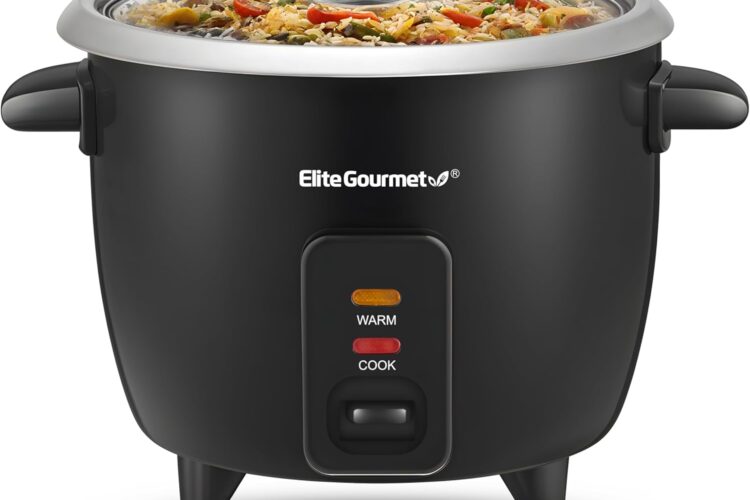
For many home cooks, preparing rice can feel surprisingly inconsistent. One batch turns out fluffy and separate; the next emerges sticky or scorched at the bottom. An electric rice cooker solves this by automating the entire process—heating, cooking, and then holding the food at serving temperature without further attention. The Elite Gourmet ERC003BX Electric Rice Cooker with Automatic Keep Warm is a compact, straightforward model designed to do exactly that. With a 6‑cup cooked capacity (3 cups uncooked), it promises not only reliable rice but also the flexibility to prepare soups, stews, grains, and hot cereals.
This article provides a detailed, professional overview of the ERC003BX. We will explore its features, examine how it can be used beyond basic rice, identify who might benefit from it, discuss important considerations, compare it to other types of cookers, and answer frequently asked questions. The goal is to help you decide whether this appliance fits your cooking habits and lifestyle—without exaggeration, promotional language, or fake testimonials.
Key Features of the Elite Gourmet ERC003BX
Understanding the appliance starts with its specifications and design choices. The ERC003BX is a basic “on/off” rice cooker, but its simplicity is intentional. Here is what it offers.
6‑Cup Cooked Capacity (3 Cups Uncooked)
The cooker produces up to 6 cups of cooked rice when you start with 3 cups of uncooked rice using the included measuring cup. This is a common size for individuals, couples, or small families of three to four people. It yields enough for a main meal plus leftovers for lunch the next day. If you typically cook for one or two, you can easily prepare smaller amounts (e.g., 1 cup uncooked = 2 cups cooked) with the same reliable results.
Automatic Keep‑Warm Function
Once the cooking cycle finishes, the unit automatically switches to a “keep warm” mode. This is not a timer‑based feature; it uses a thermal sensor to maintain a steady, moderate temperature. The food stays warm without continuing to cook, burn, or dry out. This is particularly useful if your meal is not ready immediately—you can cook the rice an hour or two ahead and serve it at the perfect temperature.
Non‑Stick Removable Inner Pot
The cooking pot is made of aluminum with a non‑stick coating. The non‑stick surface helps prevent rice from adhering to the bottom, which means less scrubbing and fewer wasted grains. Moreover, the pot lifts out completely, allowing you to bring it to the table for serving and wash it separately from the electrical base. This design also simplifies measuring and adding ingredients directly into the pot before cooking.
Tempered Glass Lid with Cool‑Touch Handle
The lid is constructed from tempered glass, so you can monitor the cooking process without lifting it. Lifting the lid releases steam and heat, which can extend cooking time or alter the texture of the rice. The glass lid also has a cool‑touch handle, making it safer to remove when the cooking is done.
Simple One‑Button Operation
There are no digital displays, timers, or multiple settings. A single switch or button starts the cooking cycle. An indicator light shows when the cooker is in operation. When the rice is done (detected by temperature rise above the boiling point of water), the switch automatically pops up or clicks to the “warm” position. This straightforward design means there is virtually no learning curve.
Included Accessories
The package includes a measuring cup and a serving spatula. The measuring cup is calibrated specifically for the cooker’s rice‑to‑water ratios, so using it is important for consistent results. The spatula is typically made of heat‑resistant material that will not scratch the non‑stick coating.
How the ERC003BX Can Be Used
While the name emphasizes rice, the ERC003BX can handle a wider range of dishes. Its heating cycle—full power until water is absorbed or evaporated, then a gentle warm‑hold—creates opportunities beyond plain white rice.
1. Perfectly Cooked White and Brown Rice
This is the appliance’s primary purpose. It reliably produces fluffy white rice (jasmine, basmati, or long‑grain) and, with minor adjustments, brown rice. Brown rice requires more water and a longer cooking time, so some users run a second cycle or add extra water. However, many find that following the manufacturer’s guidelines or tested online ratios yields good results.
2. Other Whole Grains
Quinoa, farro, barley, and millet cook well in a rice cooker because they use a similar absorption method. For example, quinoa typically uses a 1:2 grain‑to‑water ratio. Simply rinse the grain, add water and a pinch of salt, and press the cook button. The automatic shut‑off prevents overcooking.
3. Hot Cereals for Breakfast
Oatmeal (rolled or steel‑cut), cream of wheat, or rice porridge can be prepared with minimal effort. Place the cereal and liquid (water or milk) in the pot, start the cooker, and go about your morning routine. The keep‑warm function ensures your breakfast stays hot even if you are not ready to eat immediately.
4. Soups and Stews in Small Batches
The gentle, consistent heat is suitable for simmering soups and stews. You can make a small pot of lentil soup, vegetable broth, or a hearty beef stew. Because the cooker does not have a high‑heat “sear” function, you may want to brown meats or sauté aromatics in a separate pan first, then transfer them to the rice cooker with liquid and other ingredients. The unit will bring the mixture to a boil and then reduce to warm, allowing flavors to meld.
5. One‑Pot Meals (Rice with Protein and Vegetables)
This is where the cooker becomes surprisingly versatile. Layer seasoned chicken pieces, chopped vegetables, rice, and broth (or water with spices). Press cook. The result is a complete meal where the rice absorbs the flavors of the other ingredients. This works best when the solid ingredients are cut into small, uniform pieces to ensure even cooking.
6. Steaming (With a DIY Rack)
The ERC003BX does not come with a steaming basket, but you can improvise. Place a heat‑safe metal or silicone rack (or even a small inverted bowl) in the bottom of the pot, add a small amount of water, and put vegetables, dumplings, or fish on a plate above the rack. Close the lid and start the cooking cycle. The trapped steam will gently cook the food. This method works particularly well for broccoli, carrots, or frozen dumplings.
Who Might Find This Appliance Suitable
Different cooking environments and lifestyles benefit from a basic electric rice cooker. The following groups are likely to appreciate the ERC003BX.
Individuals and Small Families
If you cook for one to three people, the 6‑cup cooked capacity is nearly ideal. It avoids the waste associated with larger cookers while still providing enough for multiple servings. For a couple, a single batch can serve as a side dish for two nights, or as the base for a rice bowl lunch.
College Students and Dorm Residents
Many dormitories allow rice cookers because they are enclosed, automatically shut off, and do not have exposed heating elements (unlike hot plates). The ERC003BX is compact, easy to store, and requires only a standard electrical outlet. Students can prepare affordable, nutritious meals without needing a full kitchen. (Always check your dorm’s specific appliance policies.)
Busy Professionals and Parents
Time is often scarce. With a rice cooker, you can start dinner in the morning or immediately upon arriving home. The automatic keep‑warm means you are not tied to the stove; you can attend to other tasks while the food cooks and stays ready. This reduces the temptation to order takeout on hectic evenings.
RV, Camper, and Boat Owners
Recreational vehicles and boats have limited counter space and power. The ERC003BX is lightweight (approximately 3.5 pounds) and draws around 300‑400 watts, which is manageable for many inverters or campground hookups. Its small footprint and simple operation make it a popular choice for travel cooking.
People Transitioning to Healthier Eating
Cooking whole grains from scratch is more economical and often healthier than instant or pre‑flavored packets. A rice cooker simplifies the process, removing the excuse to rely on processed alternatives. You can prepare bulk batches of quinoa or brown rice for the week and use them in salads, bowls, or as side dishes.
Those with Limited Kitchen Equipment
In a studio apartment, tiny house, or even a temporary rental, you may not have a full stove. A rice cooker can serve as a primary cooking appliance for grains, soups, and one‑pot meals. Pair it with a small microwave or toaster oven, and you have surprising culinary range.
Important Considerations Before You Decide
No appliance is perfect for every person. The ERC003BX has limitations that are worth understanding before you purchase.
Capacity May Be Insufficient for Larger Groups
If you routinely cook for five or more people, or if you like to make large batches of rice to freeze for later, 6 cups cooked may be too small. In that case, look for a model with 10‑cup or 14‑cup cooked capacity. The same holds for preparing large volumes of stew or soup; the inner pot holds only about 1.5 to 2 quarts of liquid safely.
Basic Functionality Means Fewer Features
This is an entry‑level “on/off” cooker. It lacks:
- A delay timer (to start cooking at a specific future time).
- Multiple preset programs for different rice types (brown, sushi, porridge).
- A digital display showing cooking time or temperature.
- A steaming basket or other accessories.
If you want to schedule rice to be ready when you walk in the door, or if you frequently cook brown rice and want a dedicated setting, you may need a more advanced “fuzzy logic” or “micom” cooker. Those models cost significantly more but offer greater precision.
Cleaning Requires Care
While the non‑stick pot is removable and dishwasher‑safe (though hand washing is recommended to prolong the coating), the main body—containing the heating element and electronics—must never be submerged. Wipe it with a damp cloth only. The glass lid may accumulate condensation and food splatter; it can be washed separately with warm soapy water, but the lid’s rim and steam vent should be dried thoroughly to prevent mold.
Heat and Steam Output
Like any cooking appliance, the ERC003BX releases steam from a vent in the lid. During operation, the exterior becomes warm to the touch (though not dangerously hot if used as directed). You must place it on a heat‑resistant surface, away from walls, cabinets, or flammable materials. A clearance of at least 4–6 inches on all sides is prudent.
Learning Curve for Non‑Rice Dishes
Rice (especially white rice) is almost foolproof. However, cooking brown rice, quinoa, or soups may require some experimentation. Brown rice often needs more water and a second cook cycle. Soups with high liquid content may not trigger the “warm” switch as reliably, because the temperature may not rise above boiling until most of the liquid has evaporated. Some users find that they need to monitor thicker dishes more closely.
Comparison of General Categories (Without Attacking Competitors)
To put the ERC003BX in context, it helps to understand how basic rice cookers differ from other types of small electric cookers. Below is a neutral, categorical comparison.
Basic On/Off Rice Cooker (e.g., Elite Gourmet ERC003BX)
- How it works: A single heating element runs at full power. A magnetic or bimetallic thermostat detects when the temperature exceeds 100 °C (212 °F)—meaning the water has been absorbed or evaporated—and switches to a lower “keep warm” circuit.
- Typical price range: Low.
- Best for: White rice, simple grains (quinoa, oatmeal), and one‑pot meals where you do not need precise temperature control.
- Pros: Very affordable, extremely easy to use, lightweight, small footprint.
- Cons: No delay timer, no presets, may struggle with brown rice or whole grains that require longer cooking.
Advanced “Fuzzy Logic” Rice Cooker
- How it works: A microprocessor and multiple sensors continuously adjust temperature and cooking time based on the type of rice and water volume. These cookers often have menus for white rice, brown rice, sushi rice, porridge, and even cake.
- Typical price range: Medium to high (often 3–5 times the cost of basic models).
- Best for: Cooks who want perfect results for a wide variety of rices and grains without any guesswork.
- Pros: Extremely consistent, includes timers and presets, better for brown rice and specialty rices.
- Cons: More expensive, heavier, larger footprint, more complex controls.
Small Electric Pressure Cooker (e.g., 3‑quart Instant Pot)
- How it works: Uses pressurized steam to cook food much faster than conventional methods. Many models include a “rice” setting, but they also do much more (sauté, slow cook, steam, make yogurt).
- Typical price range: Medium.
- Best for: Users who want one appliance that can replace several (pressure cooker, slow cooker, rice cooker, steamer).
- Pros: Very versatile, extremely fast for beans and tough meats, can brown food before pressure cooking.
- Cons: Larger and heavier, steeper learning curve, more parts to clean (sealing ring, lid, inner pot), generally more expensive than a basic rice cooker.
Microwave Rice Cooker
- How it works: A plastic container with a vented lid designed to cook rice in a microwave oven.
- Typical price range: Very low.
- Best for: Extremely space‑constrained kitchens, occasional rice cooking.
- Pros: Cheap, takes almost no storage space, can be used for reheating.
- Cons: No automatic keep‑warm; requires manual timing and attention; results can be inconsistent; plastic may stain or warp over time.
Summary for decision‑making: If your priority is a low‑cost, no‑fuss appliance that reliably cooks white rice and basic grains while keeping them warm, the ERC003BX fits perfectly. If you need advanced features (delay timer, presets) or want to cook brown rice perfectly without experimentation, consider a fuzzy‑logic cooker. If you want maximum versatility in one machine, a small electric pressure cooker is worth the extra size and cost.
Frequently Asked Questions (FAQ)
Q1: How much uncooked rice yields 6 cups of cooked rice?
Using the provided measuring cup (typically 180 ml or ¾ US cup), 3 cups of uncooked rice will produce approximately 6 cups of cooked rice. You can also cook smaller amounts—for example, 1 cup uncooked yields about 2 cups cooked.
Q2: Does the cooker automatically switch to “keep warm”?
Yes. Once the internal temperature rises above the boiling point of water (indicating that the liquid has been absorbed), the cooker automatically shifts from “cook” to “warm”. An indicator light shows the mode.
Q3: Can I cook brown rice in this model?
Yes, but brown rice requires more water and a longer cooking time. Many users add an extra ¼ to ½ cup of water and, after the first cycle completes, stir the rice and start a second cook cycle. Alternatively, soak the brown rice for 30 minutes before cooking. With practice, consistent results are achievable.
Q4: Is the inner pot dishwasher safe?
The manufacturer generally recommends hand washing the non‑stick pot with a soft sponge and mild detergent. While some users place it in the dishwasher, the high heat and harsh detergents can shorten the life of the non‑stick coating. The glass lid and spatula are safe for hand washing; the main electrical base must never be immersed.
Q5: What safety features does the ERC003BX include?
- Automatic keep‑warm prevents overheating once cooking finishes.
- Cool‑touch handle on the glass lid reduces burn risk.
- Non‑skid feet on the bottom keep the unit stable.
- Vent in the lid releases excess steam to prevent pressure buildup.
- Short power cord (typically around 24–30 inches) helps prevent tripping or tangling.
Note: The appliance does not have an auto‑shutoff that turns it off completely after a set number of hours. It will remain in “warm” mode until unplugged.
Q6: What is the difference between the ERC003BX and the Elite Gourmet ERC006SS?
Both are 6‑cup basic rice cookers. The primary difference is the inner pot material:
- ERC003BX: Aluminum pot with non‑stick coating. Easier to clean; food releases readily.
- ERC006SS: Stainless steel pot (no coating). More durable and scratch‑resistant, but rice may stick more, and cleaning requires soaking.
Choose based on your preference for easy cleanup (non‑stick) versus long‑term durability and avoidance of coatings (stainless steel).
Q7: Can I use the cooker to make soup or stew from scratch?
Yes, but with caveats. The cooker will bring the liquid to a boil and then, once the temperature rises sufficiently (usually after most liquid is absorbed or evaporated), it will switch to warm. For brothy soups, this may not happen automatically because the temperature stays near boiling. You may need to manually switch the cooker to “warm” after your desired simmering time. Also, avoid filling the pot more than halfway to prevent bubbling over.
Q8: How long does it take to cook white rice?
Typically 20–30 minutes, depending on the amount of rice and water. For 2 cups uncooked (4 cups cooked), expect about 25 minutes. The keep‑warm phase begins immediately after.
Conclusion
The Elite Gourmet ERC003BX Electric Rice Cooker is a straightforward, dependable appliance that simplifies the preparation of rice, grains, hot cereals, and even small‑batch soups or stews. Its automatic keep‑warm function provides flexibility for busy schedules, and its non‑stick removable pot makes cleanup easy. With a 6‑cup cooked capacity, it is well‑suited for individuals, couples, small families, students, and RV travelers.
That said, it is not a feature‑rich device. There is no delay timer, no digital presets, and cooking brown rice or whole grains may require a bit of experimentation. For those who want a dedicated rice cooker that performs its core function reliably without added complexity or cost, the ERC003BX represents a practical choice.
Before purchasing, consider your typical household size, how often you cook different types of grains, and whether you value simplicity over advanced features. If this appliance aligns with your needs, it can become a quietly useful part of your kitchen routine.